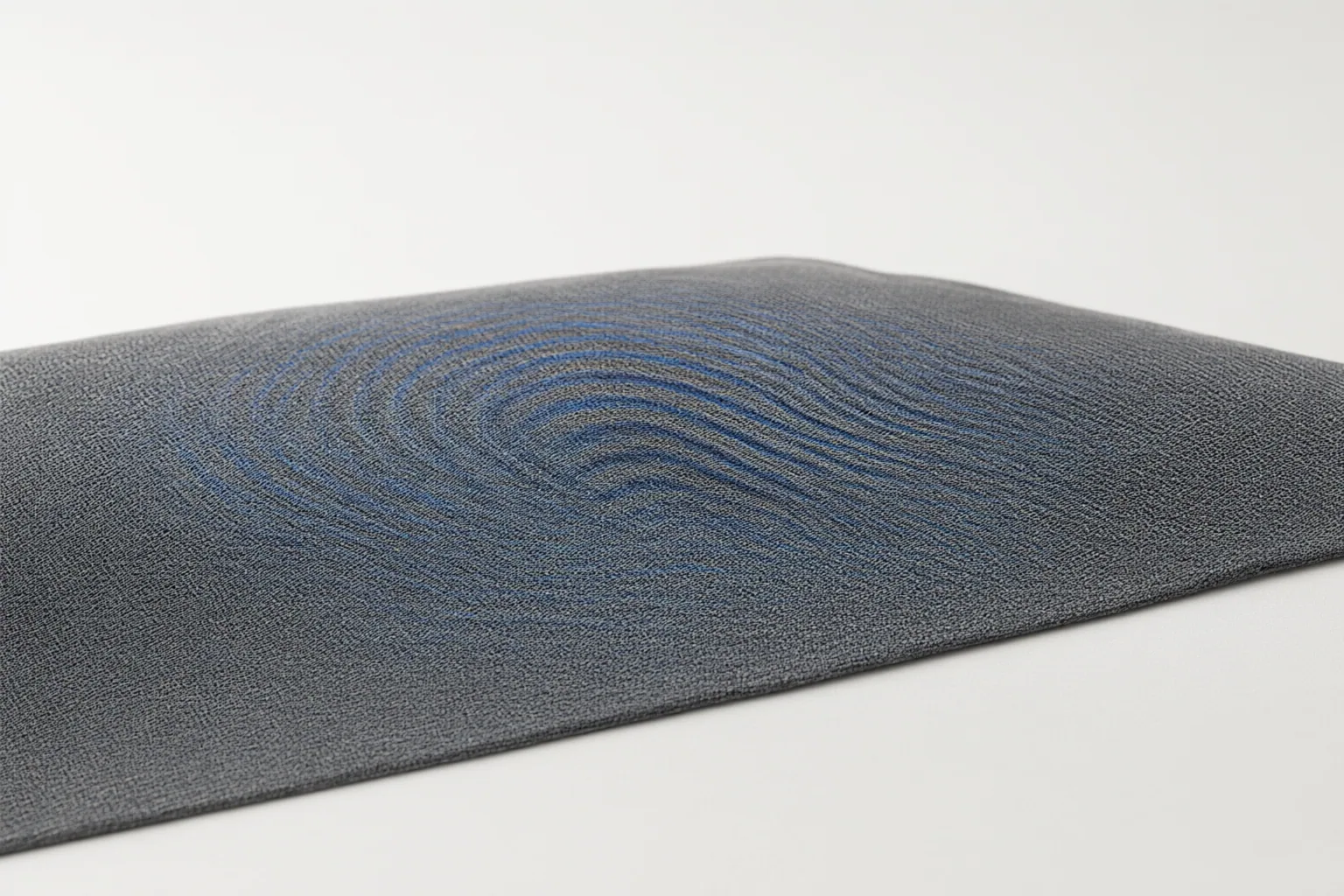
Wavy lines, colored distortions, or broad bands across fine product details may be moiré, but appearance alone does not prove that AI created an artifact. Compare the earliest capture with later versions, identify any repeating texture, and determine when the pattern appeared before choosing a correction.
Recognize the visual signs of moiré
Moiré is a large-scale interference pattern produced when similar ruled or repeating patterns overlap with differences in position, rotation, or spacing. In digital photography, fine detail in a subject can interact with the camera sensor grid and create aliasing. The visible result may include unwanted waves, conspicuous bands, distorted colors, or other patterns that are not part of the product itself.
Fabrics are a common risk because woven material contains regular, closely spaced detail. Architectural textures and other finely repeated surfaces can present the same problem. Begin by checking whether the affected area follows such an underlying structure. A wave spreading across a textile or a color distortion aligned with repeated detail is consistent with moiré, although its appearance alone cannot establish its origin. The supplied evidence does not define a reliable visual signature for AI-generated pattern artifacts, so an unexplained pattern should not be labeled as AI-generated solely by looking at the final image.
Trace when the pattern entered the image
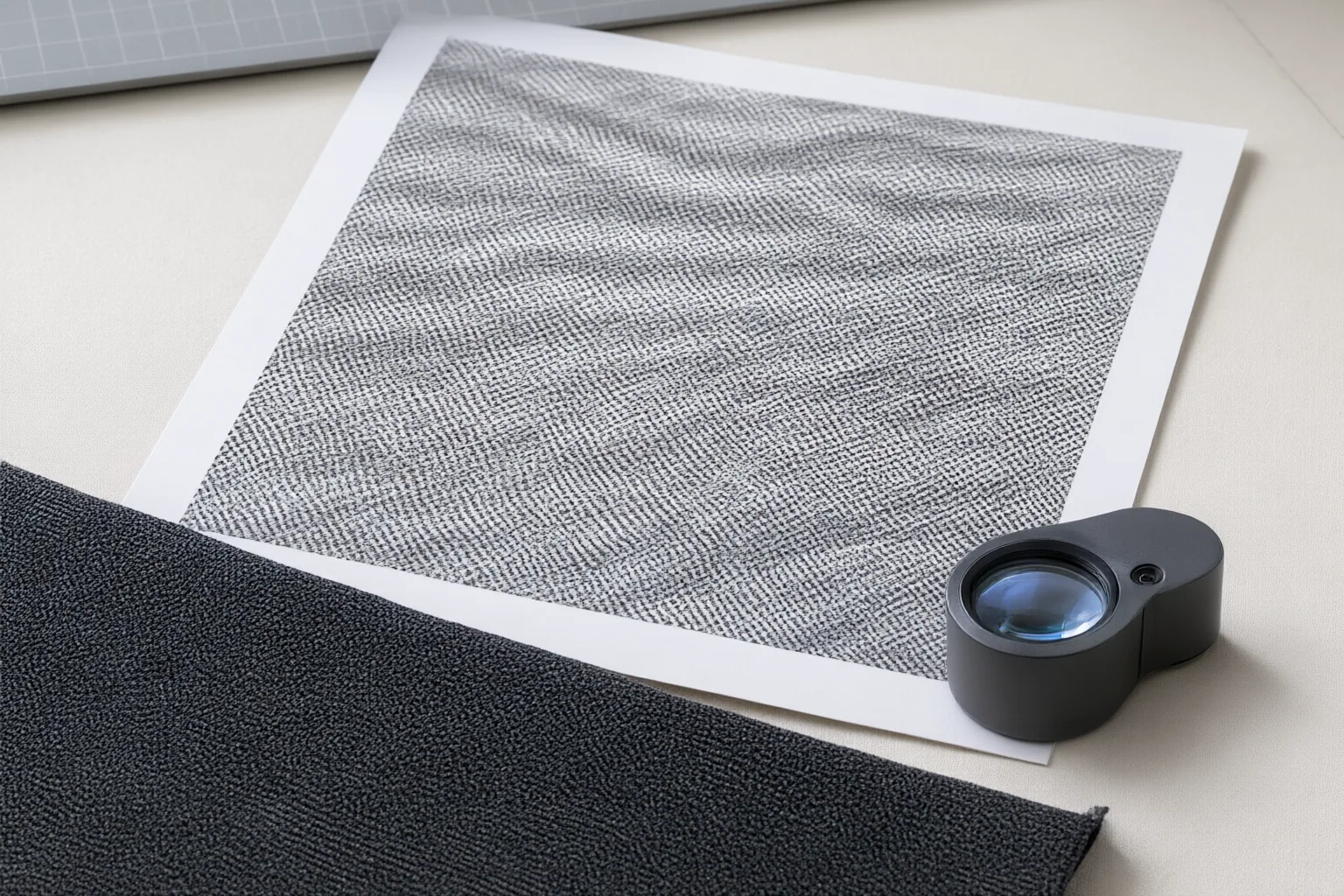
Start with the earliest available capture and compare it with every later version. If the pattern is already visible in the original photograph over fine, regular detail, an interaction between the subject and sensor grid is a plausible explanation. Inspect the image at multiple zoom levels, because the relationship between sampled detail and its display can affect how a repeating pattern appears.
If the original does not contain the problem, identify the first version that does. Moiré can also arise during digital imaging operations, including scanning a halftone image or undersampling a fine regular pattern. Check whether scanning, resizing, or another sampling-related operation occurred before the visible change. This sequence helps locate the stage that should be addressed: capture when the earliest file is affected, or later processing when only a derivative shows the problem.
Treat “AI artifact” as a diagnostic question rather than a conclusion. The available sources explain moiré but do not provide a sourced test that distinguishes it from AI-generated pattern errors. Preserve that evidence boundary and avoid assigning an AI origin without separate verification.
Choose a proportionate correction or prevention step
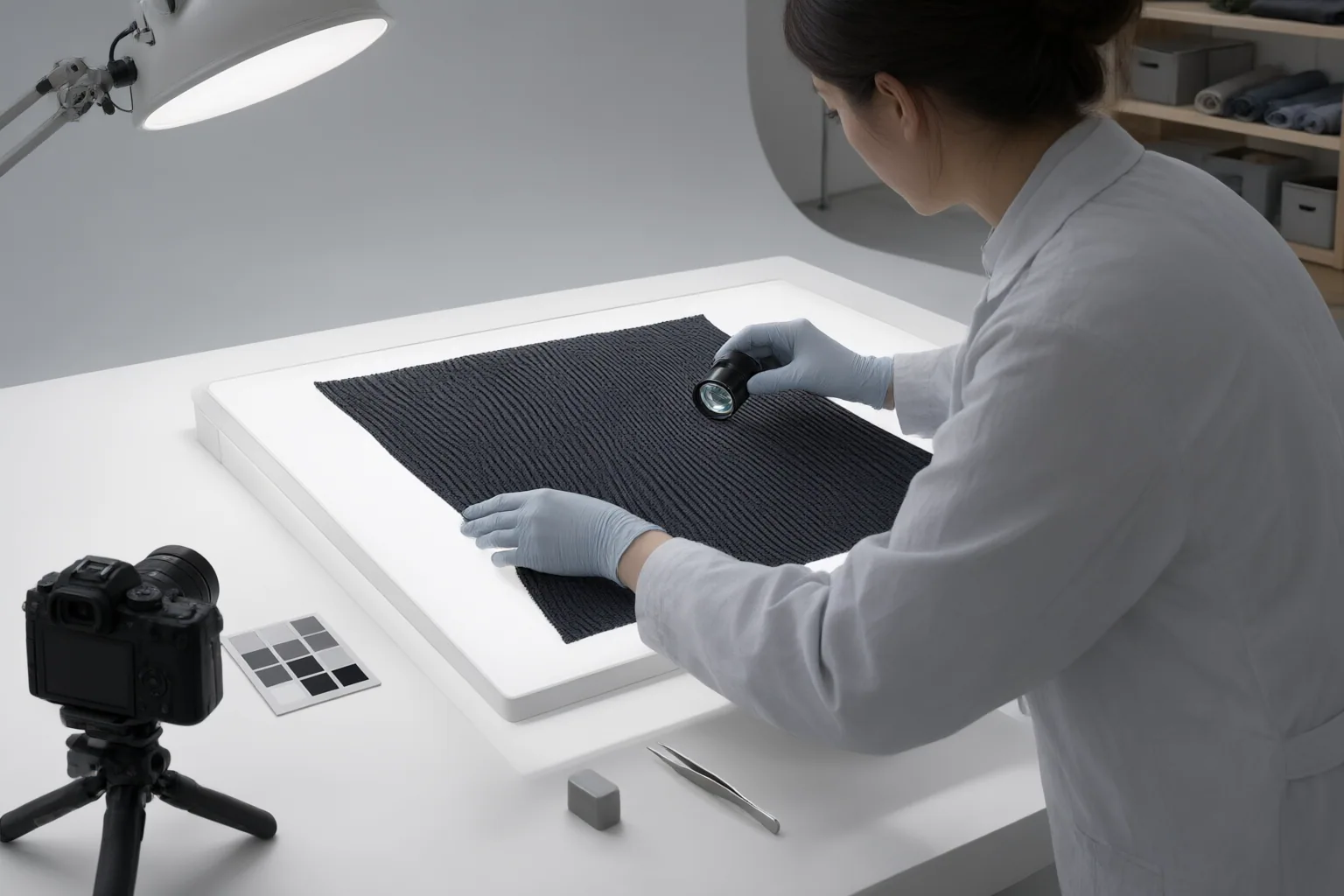
When reshooting is possible, change one capture variable at a time and compare the result with the original. Adjusting the shooting angle, aperture, focal length, or composition may alter the interaction between the product’s repeating detail and the sensor grid enough to reduce moiré. Anti-aliasing filters are another identified mitigation approach.
When a new capture is unavailable, use measured post-production controls to reduce the unwanted pattern. Work from a copy, retain the untouched original, and compare the corrected version against it so that legitimate fabric or surface detail is not confused with the interference pattern. The supplied evidence supports post-production reduction as an option, but it does not establish particular software settings or guarantee complete removal. Apply only as much correction as the image requires and evaluate whether color distortion, bands, or waves have been reduced without making unsupported assumptions about their cause.
Conclusion
The most useful distinction is not whether a pattern merely looks unusual, but when and where it appeared. Repeating detail interacting with capture or sampling can produce waves, bands, and false color associated with moiré. A pattern introduced only after scanning or undersampling points instead to a later imaging stage, while the current evidence does not justify treating either observation as proof of AI generation.
Compare the current image with the earliest available capture, inspect fine repeating details at several zoom levels, and preserve an untouched copy. Then test the least disruptive applicable step: adjust capture variables when reshooting is possible, or make a measured post-production correction when it is not.
Disclosures and limitations
- This article was prepared with AI assistance from the supplied research package and is limited to the two identified sources; claims about AI-generated artifact characteristics were not established by those sources.
- No products are recommended in this article, and no affiliate relationship is presented.
Sources
- Moiré pattern – Wikipedia — en.wikipedia.org
- Understanding Moiré in Photography and How to Avoid It — PRO EDU
Improve this guide
Report a problem or suggest the next question
Submissions enter a private editorial queue. They are reviewed and deduplicated before any public update or new page is created.