
Test AI-edited product images against an approved reference pack, inspect full-resolution files for commerce-critical changes, require human review, and document every approval or rejection before publishing.
Build an Approved Product Reference Pack
Create the comparison baseline before generating or editing any image. Start with a clean photograph of the exact product, color, shape, and variant being represented. Keep that original available throughout testing so reviewers can compare the output with the actual source rather than relying on memory.
Add the official assets needed to judge packaging accuracy: a vector logo, approved packaging copy, brand font files, color codes, imagery, usage instructions, and required marks. Record which product and variant each reference represents. This reference pack gives reviewers a shared definition of what must remain unchanged and makes it easier to identify a shifted logo, altered label color, or incorrect variant.
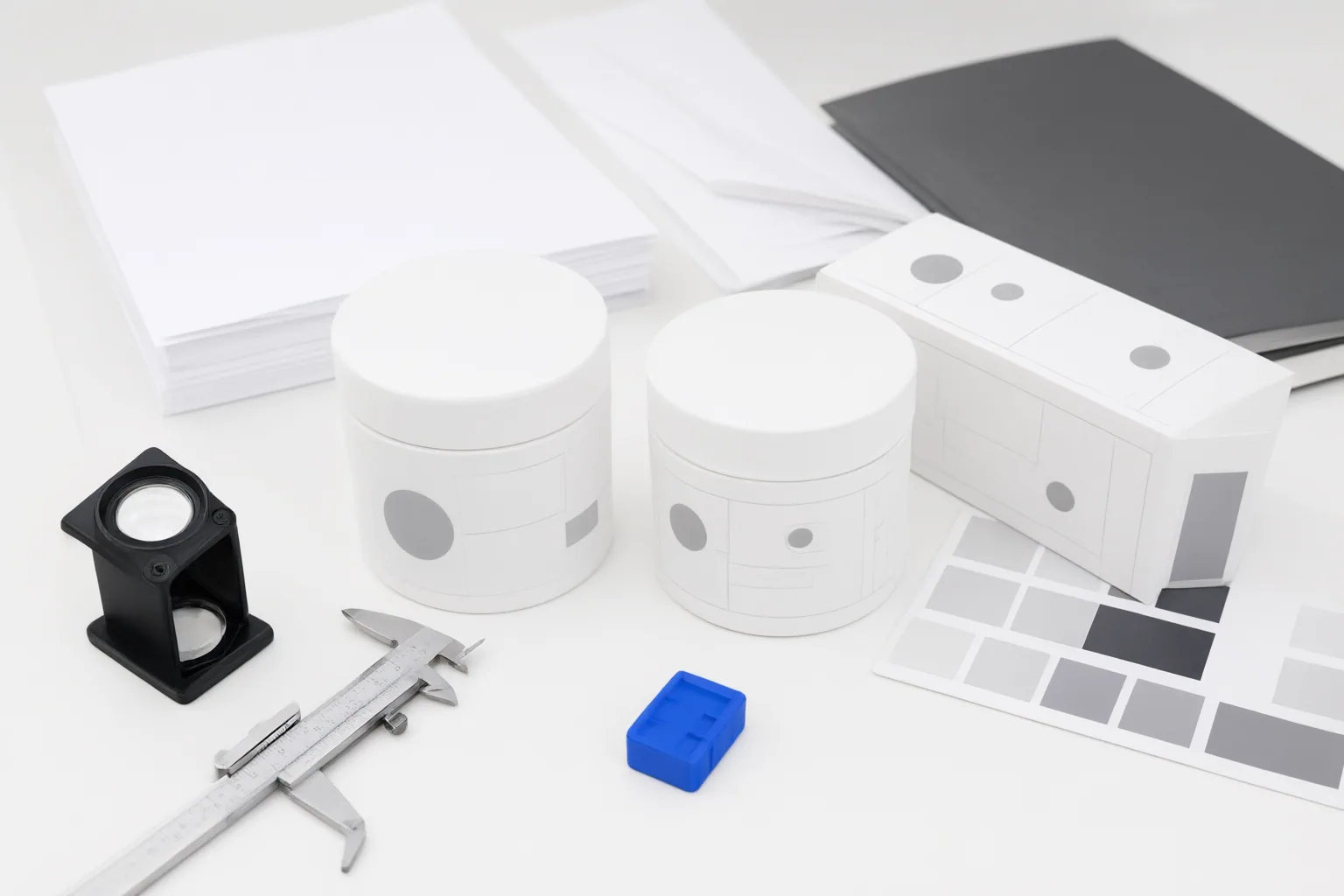
Run a Controlled, Full-Resolution Fidelity Test
Use a controlled comparison when evaluating an editing process or candidate tool. Give each candidate the same product references, creative brief, prompt, channel format, and export requirements. Changing these inputs between runs makes it harder to determine whether differences came from the tool or the test conditions.
Open each result at full resolution beside the approved product reference. Check that the logo has the correct design, position, orientation, and proportions. Read every visible word and confirm that no text was invented, scrambled, omitted, or moved. Verify that on-image copy and fonts match the approved materials.
Continue with the physical product details: label placement, product and packaging colors, exact variant, overall shape, dimensions, proportions, caps and other components, and the number of items shown. Color review should use calibrated product swatches when those are available. Do not accept an image simply because it looks polished; blurred logos, invented label lines, unavailable colorways, incorrect components, and changed pack counts can remain plausible at a glance.
Have a person review every image intended for a product page or paid advertisement. Apply written acceptance criteria consistently so that repeated small deviations do not accumulate across a set of assets.

Review Difficult Packaging and Record the Decision
Include difficult examples in the test set, not only products with a large, simple logo. Higher-risk cases include dense small text, reflective or transparent packaging, similar variants, hand-held or curved products, and sets containing multiple products. These cases can expose errors in readability, variant identity, geometry, or pack count that an easier example may not reveal.
Screen inspection may also be incomplete when an edited design will inform physical packaging. Typography can render differently on coated paperboard, kraft, film, and metallic foil. Where production output is relevant, test the type at actual size on the intended substrate rather than treating an enlarged screen view as final proof of readability.
For every reviewed version, retain the source references, generated files, rejection reasons, reviewer information, and final approved file. This record connects the published asset to its comparison baseline and shows why a version passed or failed.
Conclusion
A defensible workflow combines an approved reference pack, a controlled full-resolution comparison, human review, and a documented approval decision. The supplied sources describe useful checks, but they do not provide independent benchmarks or establish that one AI tool preserves products better than another. Before publishing customer-facing imagery, run one representative product through the complete process, write down the acceptance criteria, and retain the approved result with its review record.
Disclosures and limitations
- This article was prepared with AI assistance from the supplied research package. Its sources are vendor, product, or commercial editorial pages whose recommendations were not independently verified; no measured benchmarks, prices, ratings, or customer-review data were supplied.
- No product or tool is recommended here, and no affiliate relationship is asserted. Any future commercial recommendation should clearly disclose relevant affiliate relationships and be verified before publication.
Sources
- How to Keep Products Consistent in AI Images | Riverflow Guides — riverflow.ai
- How Ecommerce Teams Can Spot AI Product Photos Before They — Bushe.co
- Packaging Typography Guide: Fonts, Hierarchy & Readability — packagetheworld.com
- AI Product Photo Generator: What Ecommerce Teams Should Test First — aigenerator.tools
- AI ads generator benchmark for ecommerce accuracy — uselamina.ai
- Product Packaging Design Guide | VistaPrint US — Vistaprint Ideas and Advice US
Improve this guide
Report a problem or suggest the next question
Submissions enter a private editorial queue. They are reviewed and deduplicated before any public update or new page is created.