
Assess unusual subject motion by recording what visibly changes—such as position or the character of movement—before proposing a cause. Historical motion theories can supply descriptive context, but they are not validated diagnostic methods for AI-generated video.
What “Unnatural Motion” Means in This Review
For this review, “unnatural subject motion” should be treated as a description of something that appears abnormal, not as a diagnosis. The supplied translation of Aristotle’s *Physics* distinguishes natural motion from violent or unnatural motion. It also observes that an animal’s parts may move unnaturally when their positions or the character of their motion are abnormal.
That distinction offers a limited conceptual starting point: identify the position or movement that looks wrong and describe its visible character. It does not establish why an AI-generated subject moves that way. Aristotle’s account belonged to a broader theory of change and was not grounded in the controlled, quantitative experimentation expected in modern science. It therefore should not be presented as an AI-video test or a modern explanation of visual artifacts.

How to Describe the Motion Before Inferring a Cause
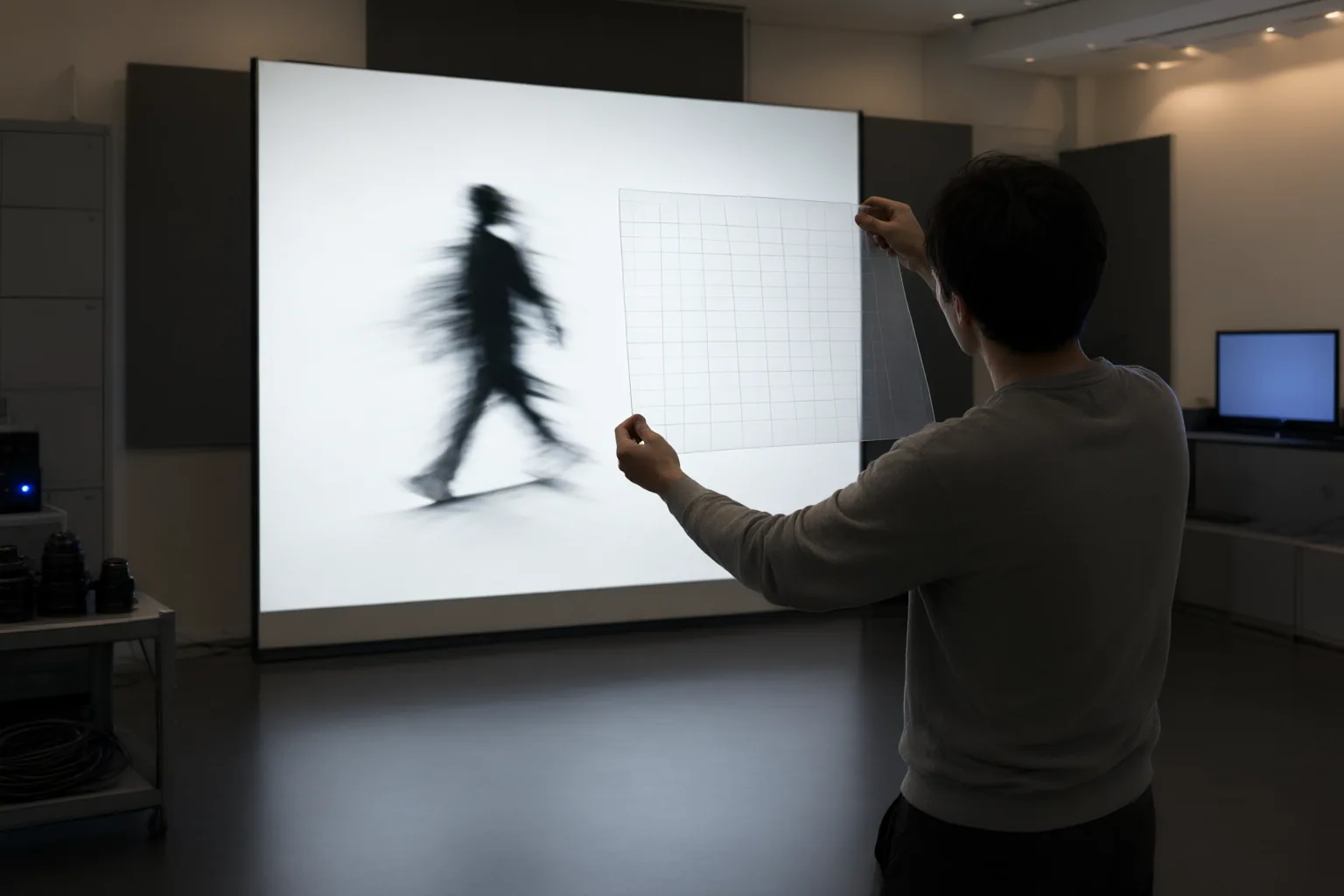
Begin with observable details. Note which subject or body part is affected, where its position appears abnormal, and how the character of its motion changes over time. Keep those observations separate from statements about what produced them. A movement can look unusual without revealing its cause.
The historical distinction between natural and unnatural motion differs from modern mechanics. Modern accounts describe motion through concepts including reference frames, inertia, momentum, and changes in momentum caused by force. These terms can help organize a precise description—for example, by prompting the reviewer to specify the frame from which movement is observed or the change being noticed. In this context, however, they are editorial vocabulary rather than validated criteria for diagnosing AI-generated video.
Do not convert a visual observation into a technical conclusion merely because a familiar physics term seems applicable. The supplied sources do not connect any position, trajectory, or change in motion to a particular AI-video cause, model behavior, or remedy.
Conclusion
A defensible assessment records the visible abnormality first and treats any causal explanation as a separate question. The historical sources support distinguishing abnormal position or character of motion, while also showing why older theories should not be mistaken for modern experimental analysis. Modern mechanics supplies concepts for describing motion, but the supplied material does not turn those concepts into AI-video diagnostics.
Review the clip shot by shot, record the exact subject position or motion that appears abnormal, and avoid assigning a cause until AI-video-specific evidence is available.
Disclosures and limitations
- This article was prepared with AI assistance from the supplied research package, which consists of historical and conceptual sources about motion rather than AI-video-specific studies.
- No products are recommended, and no affiliate relationship or product-performance claim is presented.
Sources
- Contrary Motions — superphysics.org
- Aristotelian physics – Wikipedia — en.wikipedia.org
- Logos Virtual Library: Aristotle: Physics, VIII, 4 — logoslibrary.org
- The Unmoved Mover and Aristotle: Cosmology | Encyclopedia.com — encyclopedia.com
- Basic Issues in Natural Philosophy: Part VI — arcaneknowledge.org
- The Causes of Motion — superphysics.org
- Theory of impetus – Wikipedia — en.wikipedia.org
Improve this guide
Report a problem or suggest the next question
Submissions enter a private editorial queue. They are reviewed and deduplicated before any public update or new page is created.