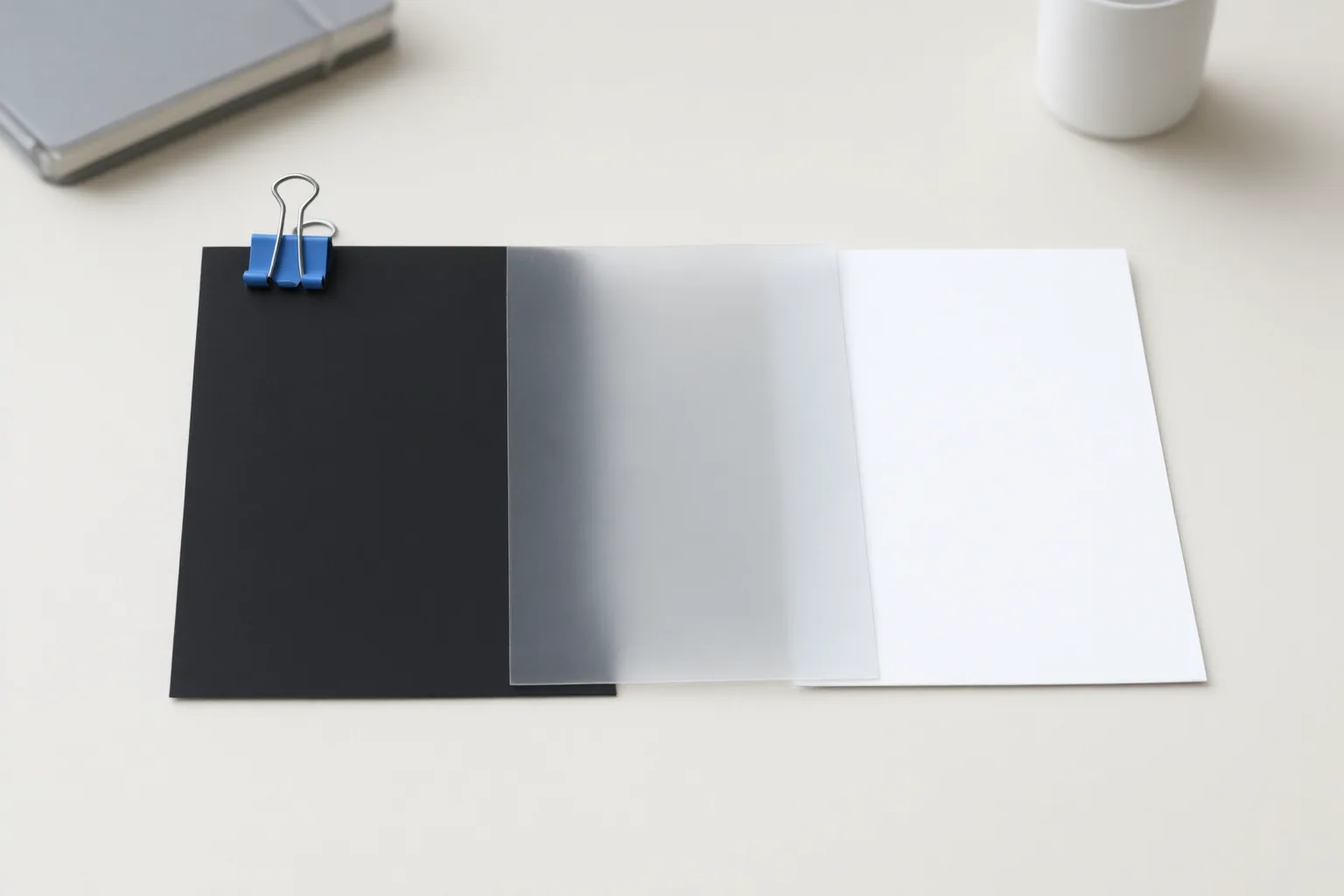
An image trimap is a single-channel guidance map that divides an image into definite foreground, definite background, and an unknown region that a matting method must resolve. These labels help the method estimate transparency at difficult boundaries such as object edges.
What an image trimap represents
An image trimap marks three kinds of regions. Definite foreground identifies pixels known to belong to the subject, while definite background identifies pixels known to be outside it. The unknown region covers pixels that still need to be classified or assigned a degree of transparency.
A common visual encoding uses white, or a value of 255, for foreground and black, or 0, for background. Gray represents the unknown region. Documented implementations differ slightly: one source uses 128 for gray, while another uses 127. Those examples explain the convention but do not establish one universal gray value for every tool.

How a trimap guides foreground matting
Natural image matting estimates an alpha value from 0 to 1 for each pixel. That value represents how much the foreground contributes at the pixel, allowing the resulting alpha matte to describe both solid subject areas and partially transparent or mixed boundary pixels.
This estimation is ill-posed without enough guidance because the visible image alone may not reveal the correct separation. A trimap supplies constraints: pixels in the known foreground and background regions already have established roles, so the method can concentrate its estimation on the unknown region. That region typically includes unresolved boundaries where foreground membership or transparency must still be determined. The trimap therefore guides the calculation without itself being the finished alpha matte.

How trimaps are made—and why quality matters
Trimaps may be drawn manually, generated with machine-learning methods, or derived from an existing mask or alpha matte. In the latter workflow, morphological operations such as erosion and dilation can help establish the known regions and the band that remains unknown.
Manual annotation can be time-consuming even for experienced users, and trimap controls or requirements may not be obvious in an editing interface. The quality of the map also matters. One source describes an ideal trimap as clearly separating foreground from background while minimizing unknown pixels. Because the unknown region is only an approximation of where separation remains unresolved, poor placement can reduce the quality of the resulting matte. The practical goal is not simply to make that region broad, but to focus it on genuinely uncertain areas while keeping reliable labels elsewhere. Supplying such guidance for every video frame can also be impractical in real-time processing.
Conclusion
Trimaps are useful when a matting method needs explicit guidance about what is foreground, what is background, and what remains unresolved. They are not the only possible interface. Click2Trimap frames click-guided trimap prediction as a three-class interactive segmentation task, while MODNet documents a portrait-matting approach that does not require a trimap.
The alternatives do not erase the value of careful guidance: the Click2Trimap paper notes that earlier sparse-guidance approaches could retain an accuracy gap compared with trimap-based methods. Before running a supported matting tool, inspect its foreground, background, and unknown regions—especially around uncertain edges—and refine unclear labels if the resulting cutout needs improvement.
Disclosures and limitations
- This article was prepared with AI assistance using only the cited research sources; it does not claim personal product use, testing, or interviews.
Sources
- Understanding Trimaps in Image Matting | withoutBG — withoutBG
- GitHub – lnugraha/trimap_generator: Generating automatic trimap through pixel dilation and strongly-connected-component algorithms — GitHub
- Trimap: Guide Image for Alpha Matting — bestaiweb.ai
- Learning Trimaps via Clicks for Image Matting — arxiv.org
- Learning Trimaps via Clicks for Image Matting — arxiv.org
- GitHub – ZHKKKe/MODNet: A Trimap-Free Portrait Matting Solution in Real Time AAAI 2022 — GitHub
Improve this guide
Report a problem or suggest the next question
Submissions enter a private editorial queue. They are reviewed and deduplicated before any public update or new page is created.