Evaluate AI dubbing as a series of connected quality checks—not a single score. Review the source transcript, translated meaning, terminology, vocal delivery, speaker consistency, timing, and visual synchronization before approving a full production run.
Prepare the Source and Define Acceptance Criteria
Start by correcting the source transcript. Check omissions, repeated words, sentence boundaries, names, numbers, measurements, acronyms, and punctuation that could change meaning. An inaccurate transcript can introduce problems that later appear to be translation or voice-generation failures.
Before production, document the target language and regional variant, delivery channels, caption and audio requirements, reviewers, and final approval owner. Set synchronization criteria for the actual format: a close-up presenter may require tighter visual alignment than a podcast-style video.
Run an early test containing difficult material, such as technical phrases, names, fast dialogue, pauses, multiple speakers, and emotional moments. Also inspect background music, noise, clipping, reverberation, and separation artifacts that could affect transcription or the reconstructed mix.
Review Meaning, Terminology, and Pronunciation
Compare the dub with the intended meaning, not merely the presence of translated words. Review for omissions, incorrect names or numbers, mistranslated technical terms, unnatural target-language phrasing, mishandled cultural references, and inconsistent terminology. Give branded terms, acronyms, and measurements their own review because they can fail during transcription, translation, or pronunciation.
Measures such as WER, BLEU, COMET, and MOS can illuminate individual aspects of a workflow, but no one metric establishes whether the complete dub will persuade viewers. Use metrics to locate possible weaknesses, then have qualified reviewers examine the affected lines in context.
Some commercial editors advertise transcript correction, translation rules, pronunciation rules, and timing controls. Treat these as vendor-reported capabilities to verify against representative material, not evidence that a product will produce an acceptable result automatically.
Check Emotion, Speaker Consistency, Timing, and Lip Sync
A semantically accurate line can still fail if disbelief, urgency, humor, or another intended emotion becomes neutral or inappropriate. Review whether the performance carries the source’s emotional texture and voice identity rather than simply delivering intelligible speech.
Check speaker similarity and speaker consistency separately. A generated voice may resemble the source overall while one conspicuous segment sounds like a different person. Review speaker assignments across the entire program, especially near cuts, interruptions, off-screen speech, and overlapping dialogue.
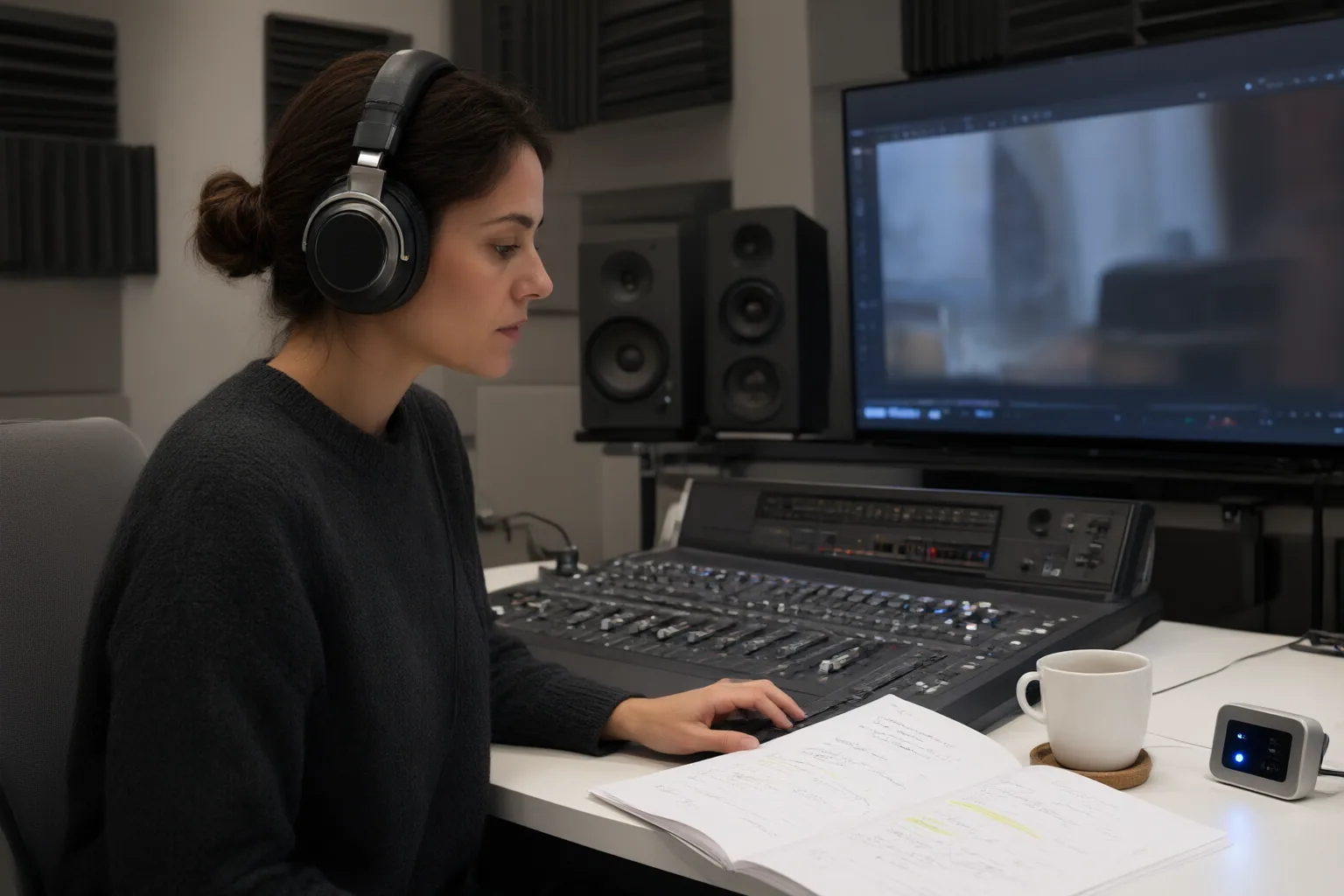
Measure each line against its available shot. Speech that runs too long may become rushed or collide with the next speaker. Split long segments at natural pauses, keep different speakers in separate segments, and avoid excessive fragmentation that makes delivery choppy. Inspect mouth alignment where faces are prominent, while applying standards appropriate to the content.
Kapwing and Vozo advertise controls spanning voices, timing, translation, pronunciation, and lip synchronization. Those descriptions identify useful evaluation categories, but the supplied evidence does not independently verify their performance or support a ranking.
Conclusion
Approve an AI-generated dub layer by layer: validate the transcript first, then review meaning and terminology, followed by emotion, voice identity, speaker assignment, timing, lip synchronization, and the final mix. Record failures at the line or segment level because averages can conceal an obvious local defect.
Before processing the full video, run a representative sample containing the hardest dialogue, review it against written acceptance criteria for every quality layer, and assign named reviewers and one approval owner.
Disclosures and limitations
- This article was prepared with AI assistance using only the supplied research package and its identified sources.
- Commercial capabilities mentioned here are vendor-reported and were not independently verified through comparative hands-on testing. Product mentions are not rankings or recommendations, and the supplied materials establish no affiliate relationship.
Sources
- How AI Dubbing Preserves Emotion and Voice Identity | Deepdub — deepdub.ai
- AI Dubbing — Free Online Video Dubbing — kapwing.com
- The AI Dubbing Workflow: From Raw Video to Lip-Synced Export — octavia.lunartech.ai
- AI Dubbing – Free Online Video Dubbing Tool (No Sign-Up) — aidubbing.io
- AI Dubbing – Auto Dub Videos in 160+ Languages | Vozo — vozo.ai
- How Do You Measure the Quality of an AI-Dubbed Video? — VMEG AI
Improve this guide
Report a problem or suggest the next question
Submissions enter a private editorial queue. They are reviewed and deduplicated before any public update or new page is created.