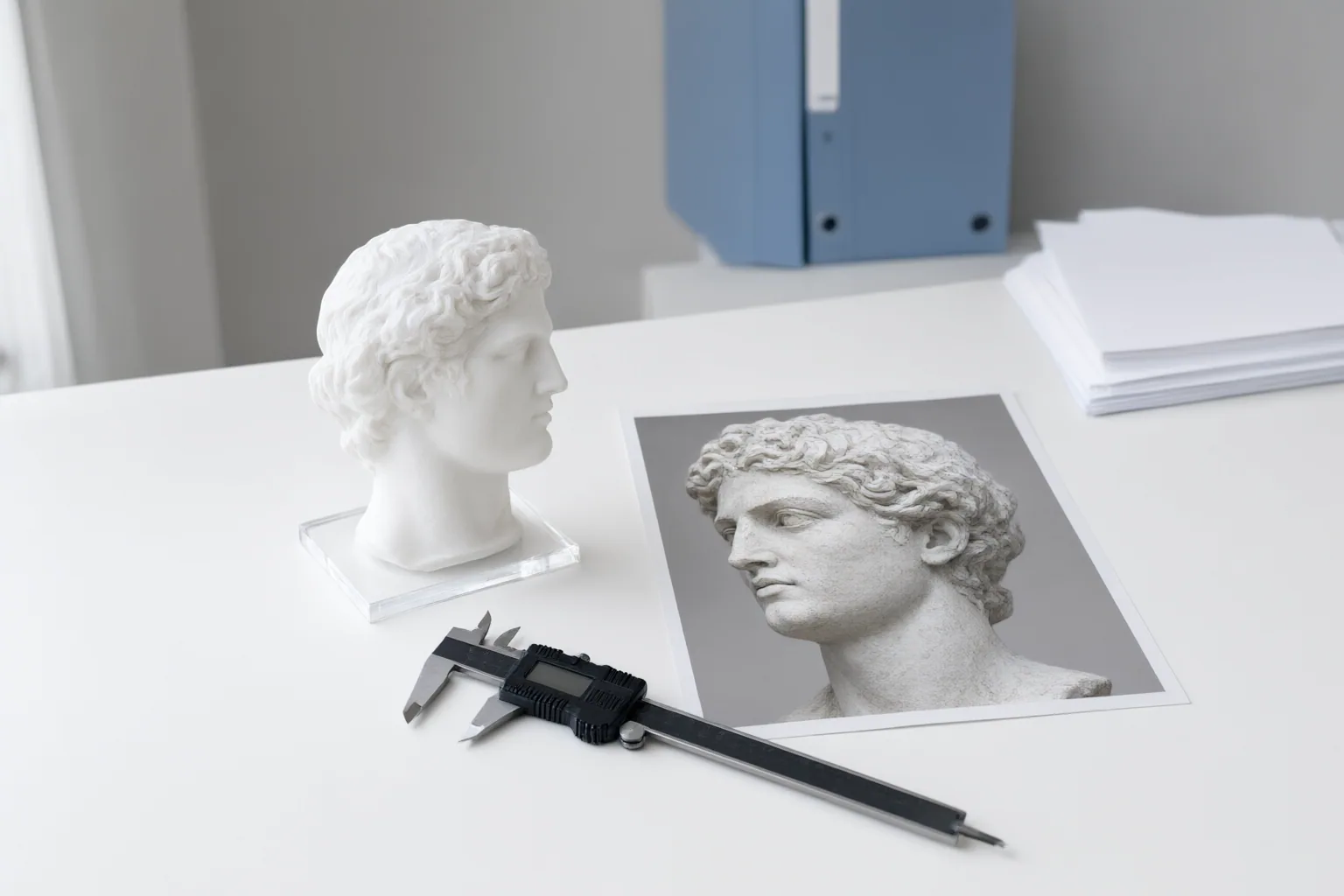
A restored face can look sharp and realistic without faithfully preserving the person’s identity. Evaluate visual quality and identity fidelity separately, then compare the result with several trustworthy images of the same person and examine recurring localized traits.
Sharpness and identity fidelity are different
Sharpness answers whether a restoration looks clear and visually plausible. Identity fidelity asks whether it still represents the same person. These are complementary goals, not interchangeable measures.
When an original face is severely degraded, person-specific evidence may be missing. A generative model can fill those gaps with a convincing face, but the invented details may not match localized traits that persist across genuine images of the subject. Consequently, apparent realism should not be treated as proof of identity preservation.
Begin an evaluation by judging general image quality on its own. Then conduct a separate identity review. A result can pass the first review while failing the second, and increased sharpness cannot resolve identity information that was absent from the source.
Compare against same-identity reference images
Compare the restoration with several trustworthy reference images known to show the same person. The cited research uses same-identity references because they can provide persistent identity evidence that a degraded input no longer contains.
Look for agreement between the restored face and traits that recur across the references. Do not require the restoration to match one particular reference in every respect: reference-supported identity recovery and exact agreement with a paired target are described as distinct, complementary evaluation goals.
Multiple references also help prevent a single image from becoming the entire basis of the decision. However, this is an evidence-bounded comparison method rather than a universal consumer protocol. The supplied research does not establish a definitive threshold that separates an identity-faithful restoration from an unfaithful one. If the available source and references do not provide consistent person-specific evidence, record the outcome as uncertain instead of treating plausibility as confirmation.
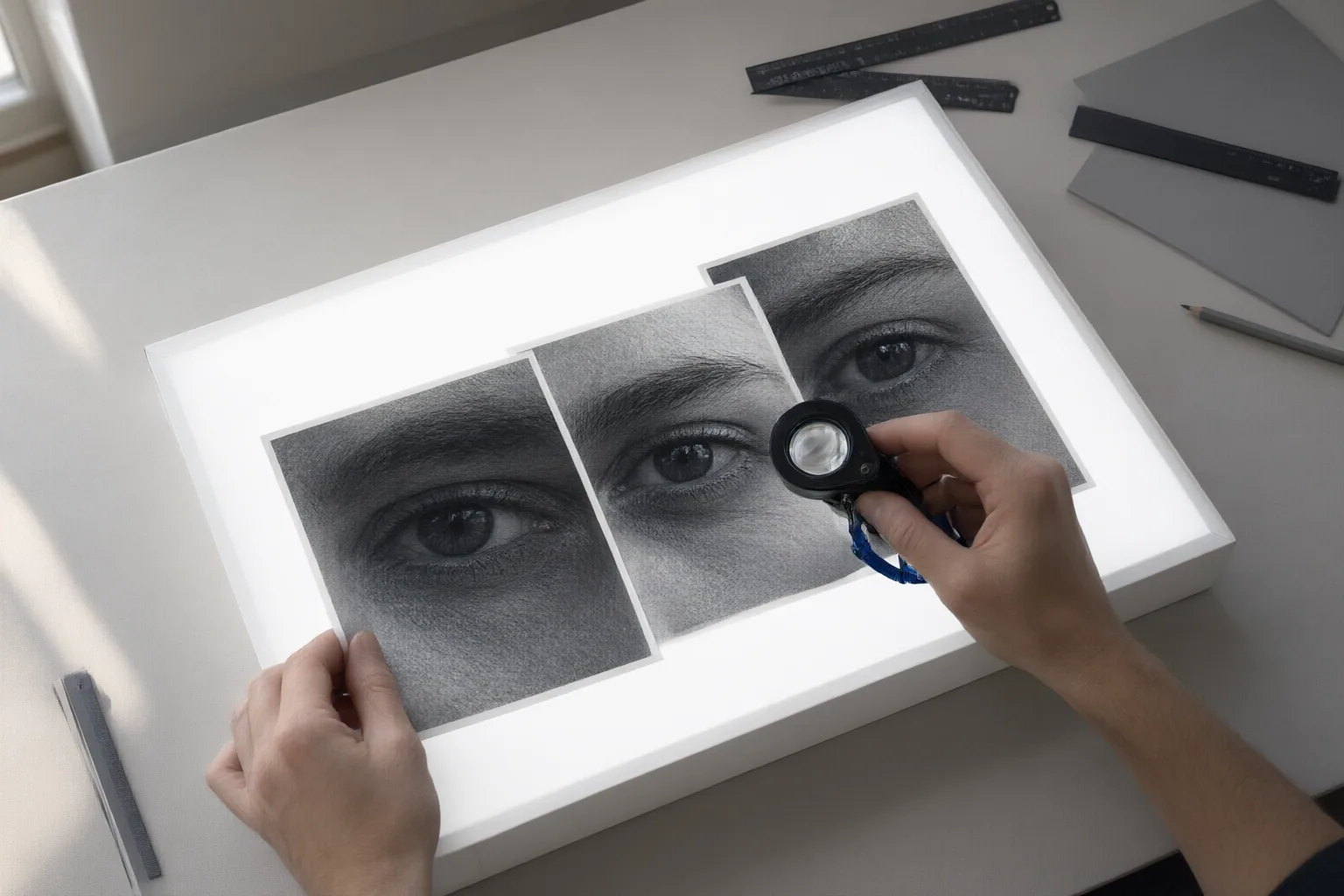
Inspect localized traits and avoid relying on one score
Review subtle, recurring facial details across the restored image and the same-identity references. The IConFace authors report a human-audited benchmark intended to assess whether persistent localized identity details survive restoration, reflecting the need to examine more than overall appearance.
Avoid reducing the decision to one identity-similarity score. The reference-guided restoration paper argues that a face identity embedding carries high-level identity information but does not encode every potentially useful visual detail. Its use of both high- and low-level reference representations illustrates why one representation can provide incomplete evidence.
Combine the available signals instead: separate perceived quality from identity fidelity, compare multiple references, and check whether localized traits remain consistent. Treat a score as supporting evidence rather than a final verdict. The cited papers’ benchmark and performance statements are author-reported research findings, not independently verified product tests, and they do not provide a universal tool-ranking method.
Conclusion
A careful evaluation keeps clarity and realism separate from identity preservation. First assess visual quality, then compare the restoration with several reliable same-identity references and inspect persistent localized traits. Consider multiple forms of evidence instead of relying on one similarity score.
Certainty may be impossible when severe degradation has removed too much person-specific information. In identity-sensitive situations, do not allow a sharp result to conceal that limitation. Compare each restoration with several trustworthy references, and reject or manually review any result whose identity-related details remain uncertain or inconsistent.
Disclosures and limitations
- This article was prepared with AI assistance from the supplied research package. Material claims are based on two cited arXiv research papers, whose benchmark and performance statements are author-reported rather than independently verified product results.
- No products are recommended or ranked in this article, and no affiliate relationship is presented.
Sources
- IConFace: Fine-Grained Identity Conditioning for Reference-Aware Face Restoration — arXiv.org
- Identity preservation – Wikipedia — en.wikipedia.org
- Identity Preservation | Food Quality & Safety | haccp.com — haccp.com
- Reference-Guided Identity PreservingFace Restoration — arxiv.org
Improve this guide
Report a problem or suggest the next question
Submissions enter a private editorial queue. They are reviewed and deduplicated before any public update or new page is created.