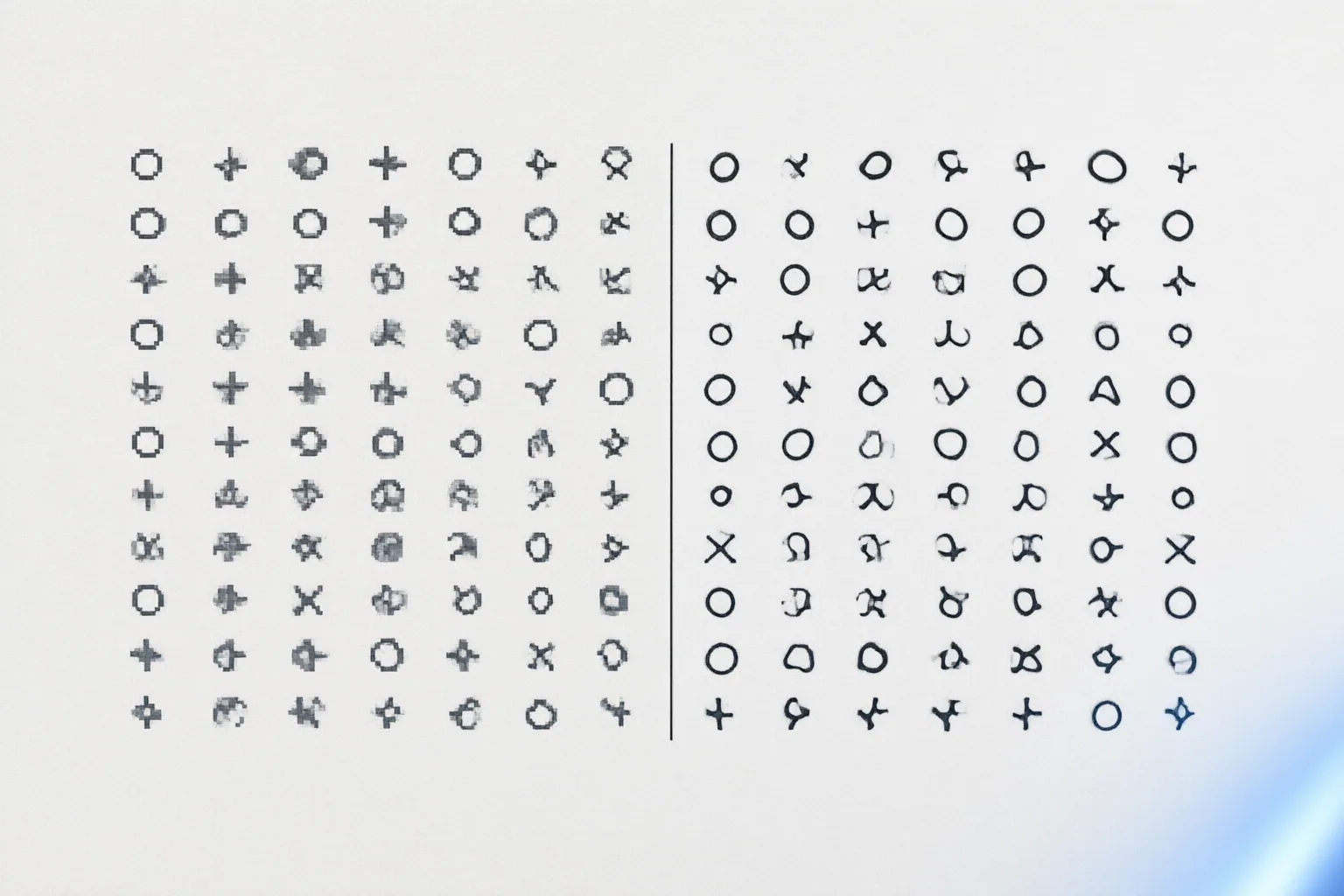
AI image super resolution adds pixels to create a higher-resolution image, but small lettering may lack enough source detail for reliable reconstruction. The result can look cleaner or sharper while changing the shapes—and potentially the meaning—of the original characters.
The Short Answer: Upscaling Must Fill In Missing Detail
Small text is especially vulnerable during upscaling because each letter may be represented by very few pixels. When the source does not clearly capture a stroke, gap, or curve, increasing the resolution cannot reveal detail that was never recorded. The upscaler must estimate what belongs between or around the available pixels.
That estimation can produce smoother edges and more legible-looking forms, but visual improvement is not proof of faithful reconstruction. A narrow opening may close, two strokes may merge, or an ambiguous shape may become a different plausible character. This distinction matters for screenshots, labels, and other images where the exact wording is more important than general visual polish.
How Interpolation and Generative Reconstruction Affect Letters
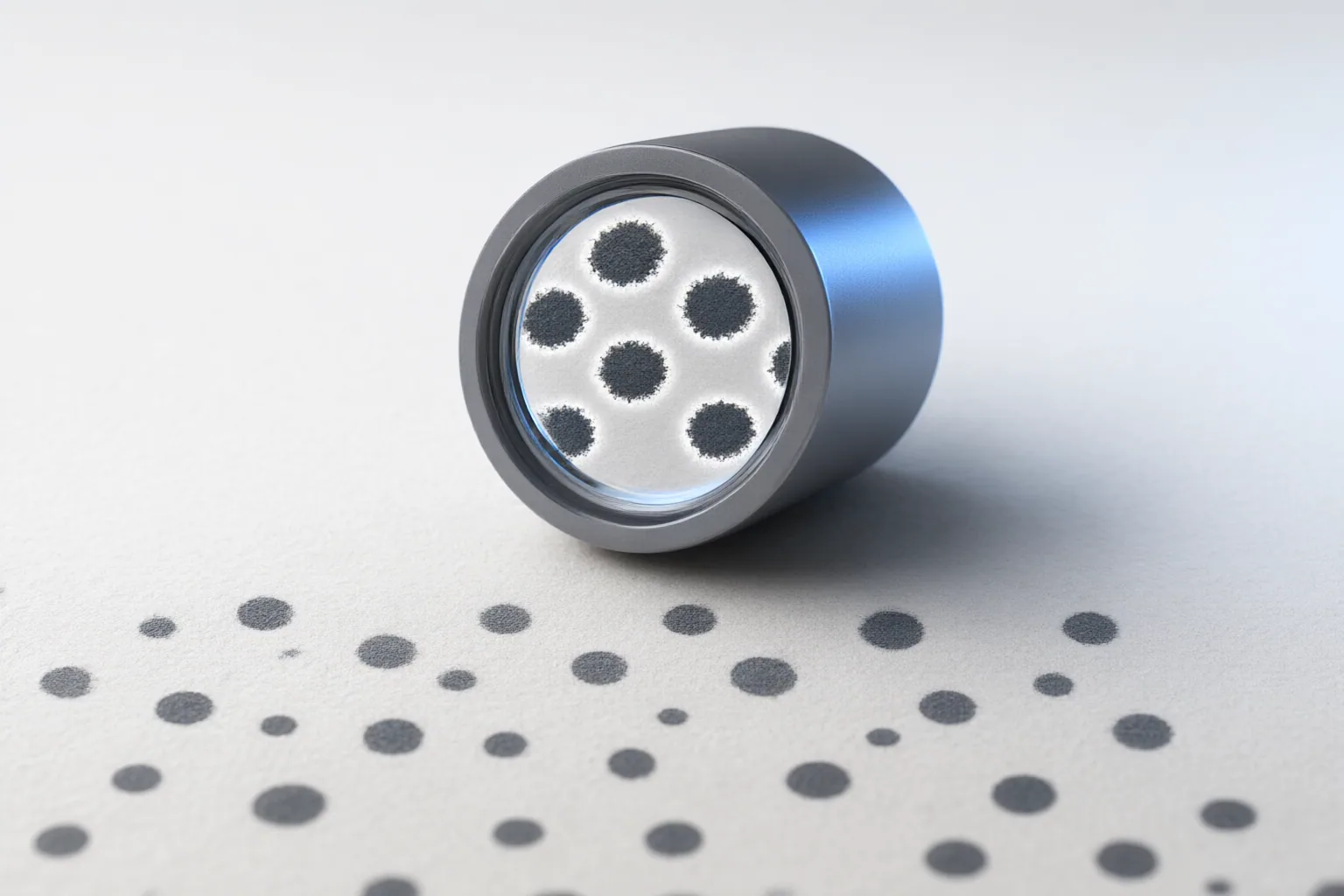
Traditional prediction-based methods include linear, bicubic, and Lanczos interpolation. According to the Fritz AI source, these approaches estimate new pixels from existing image information, but they can reduce contrast or soften sharp edges. For lettering, such smoothing can weaken the small boundaries that distinguish one character from another.
Generative super-resolution works differently. The same source explains that GAN-based methods generate plausible, natural-looking image content instead of relying only on nearby pixel values or filter-based averaging. Foundation models are also described as pretrained, adaptable models that can be applied to downstream generative tasks including image super-resolution.
Plausibility is useful for visual detail, but it is not the same as textual fidelity. If the original pixels leave a character uncertain, a generative method can create a convincing letter-like form without establishing that it matches the source. The supplied evidence does not quantify how frequently either approach changes text.

Why Clearer-Looking Text Is Not Necessarily Correct Text
Resolution, perceived sharpness, readability, and accuracy are separate qualities. An enlarged word may have cleaner edges and stronger contrast, making it easier to inspect, while one or more reconstructed characters still differ from the original.
Pokecut markets its super-resolution service for images containing text and claims it can make fonts sharper and more readable. That is a vendor claim, not independent confirmation that original characters are preserved accurately. The supplied sources contain no controlled comparisons, OCR measurements, or independent benchmarks for text accuracy.
Evaluate important lettering by meaning, not appearance alone. Compare names, prices, measurements, model numbers, instructions, and other consequential text against the source. If the source itself is unreadable, the upscale should be treated as an interpretation rather than evidence of what the text originally said.
Conclusion
AI image super resolution can make small text look wrong because it estimates or generates missing visual detail. Interpolation may smooth significant edges, while generative reconstruction may produce a plausible form that is not necessarily faithful to the original.
Before publishing or relying on an enlarged image, compare every important character with the source. When accuracy cannot be confirmed, replace or recreate the lettering from verified text instead of assuming that a sharper-looking result is correct.
Disclosures and limitations
- This article was prepared with AI assistance using the supplied research package; material claims are limited to the cited source IDs, and vendor statements are identified as such.
- No product is recommended here. Any future commercial or affiliate relationship should be disclosed and must not be treated as evidence of product accuracy or quality.
Sources
- Image Super-Resolution using Generative Adversarial Networks – Fritz ai — Fritz ai
- Foundation Models – The Engines of Generative AI's Progress — Prompt Engineering Institute | Learn Practical AI
- Online Intelligent Image Super Resolution Enhancement | Pokecut — Pokecut
Improve this guide
Report a problem or suggest the next question
Submissions enter a private editorial queue. They are reviewed and deduplicated before any public update or new page is created.