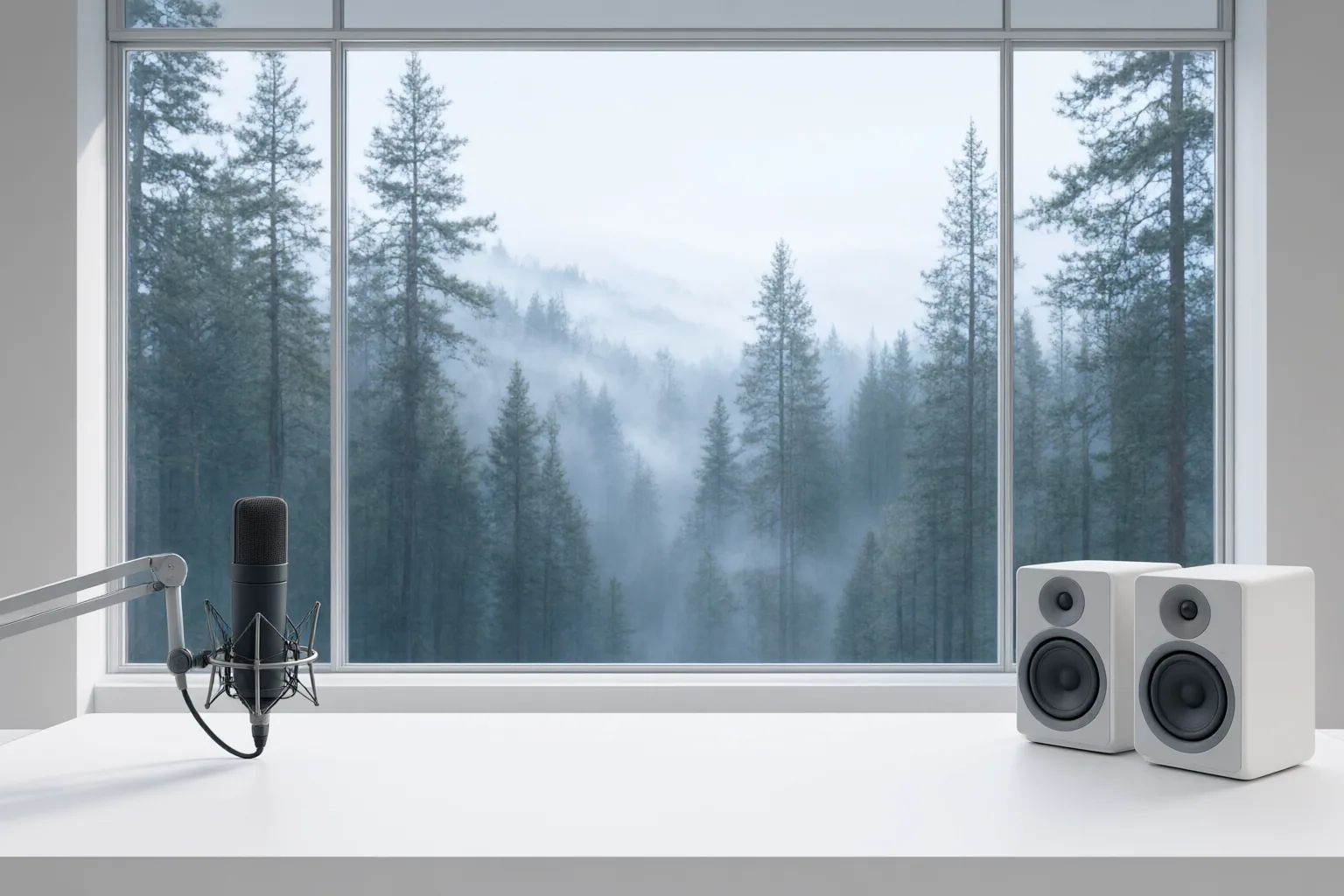
Evaluate AI-generated ambience by checking whether it matches the visible environment, changes with the setting, sits cleanly beneath narration and effects, reflects on-screen space, remains editable, and carries suitable usage rights.
Start With the Scene and Its Intended Atmosphere
Ambient sound is the continuous environmental layer beneath a scene: traffic in a city, birds in a garden, indoor room tone, or wind moving through trees. Start by comparing the generated clip with what viewers can see. The location should sound plausible, and the ambience should change when the video moves into a different environment.
Review the details as well as the general sound category. Ask whether the apparent time or season, intensity, mood, and duration fit the scene. A broadly relevant sound can still feel wrong if it suggests the wrong distance or energy. If you generate another version, describe the location, time or season, foreground and background elements, sonic texture, intensity, duration, and any looping requirement more precisely.
Check Layers, Timing, and Spatial Fit
Judge ambience as one part of a layered soundtrack. Begin with a base environmental sound, then listen for quieter supporting details. Those details can add definition, but their levels should remain restrained so the mix does not become crowded or compete with narration.
Separate continuous ambience from sounds tied to visible events. The environmental bed generally continues beneath the scene, while footsteps, character movement, and other action effects belong at specific moments. A convincing ambience track does not remove the need to check those cue points independently.
Next, evaluate spatial fit. Panning, apparent distance, reverb, and changes in volume should correspond to where the implied sound source or visible action sits in the frame. Listen through transitions as well: when the location changes, the environmental layer should follow rather than continuing unchanged. Review the complete mix, not just the generated clip in isolation, because a suitable sound can still fail when its layers obscure speech or overwhelm other effects.
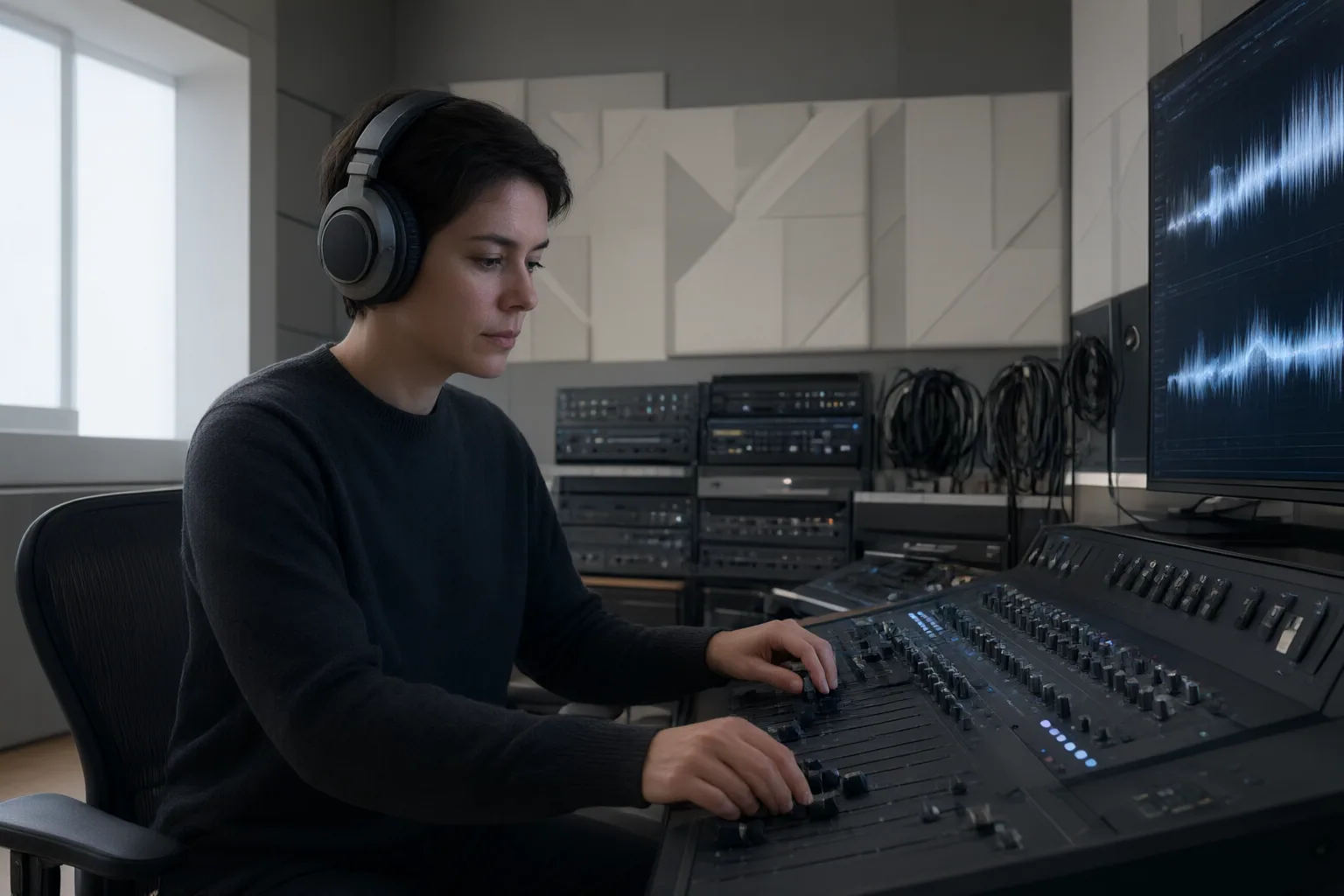
Plan for Editing, Prompt Refinement, and Usage Rights
Treat a generated audio clip as editable source material, not necessarily a finished soundtrack. It may still need trimming, layering, equalization, level matching, or alignment to the picture. If the tool generated sound from text without analyzing the video, identify visual cue points and synchronize relevant clips on the timeline yourself.
When the output misses the intended atmosphere, refine the description using observable requirements: setting, time or season, foreground and background sounds, texture, intensity, length, and whether the result must loop. Then compare the revision with the same scene instead of judging it only as a standalone recording.
Before final use, inspect the license associated with the generated or library-sourced audio. Do not infer commercial permission or attribution terms merely because a tool produced or supplied the clip. Permissions can vary by file, library, tool, and intended commercial or noncommercial use, so the applicable terms require a separate check.
Conclusion
Use a consistent review sequence: compare the ambience with the visible environment, inspect changes between locations, check spatial placement, and balance the environmental bed with narration and action effects. Make any needed trims, level adjustments, equalization, or picture-alignment edits, then verify the applicable license. Before finalizing your timeline, test one generated ambience clip against each of these checks in the full mix.
Disclosures and limitations
- This article was prepared with AI assistance using only the supplied creator guides and vendor-operated sources; no independent product testing was provided.
- No products are recommended here. Any future product links or commercial relationships should be disclosed and their licensing and affiliate implications verified separately.
Sources
- AI Sound Design for Video Creators: SFX, Foley & Atmosphere (2026) — fruitloveisland.ai
- Ambient Sound & Noise Generator — Free Online Ambience Maker — AmbientNoise.io
- AI Video Ambient Noise and Atmosphere: Set the Scene — reelmind.ai
- AI Sound Effects Generation: Create Custom Foley, SFX, and Ambient Audio in Seconds (2026 Guide) — aimagicx.com
- How to Generate Foley, Ambience, and Action Sound Effects That Sync to Video Scenes (AI Tools Guide) — Sonilo
- Free Ambient Music Maker | AI Ambient Generator – Sonura — Sonura
- AI Ambient Sound Generator for Video Backgrounds (Guide) — genailast.com
- All Ambient Sounds & Noise Generators — AmbientNoise.io
Improve this guide
Report a problem or suggest the next question
Submissions enter a private editorial queue. They are reviewed and deduplicated before any public update or new page is created.