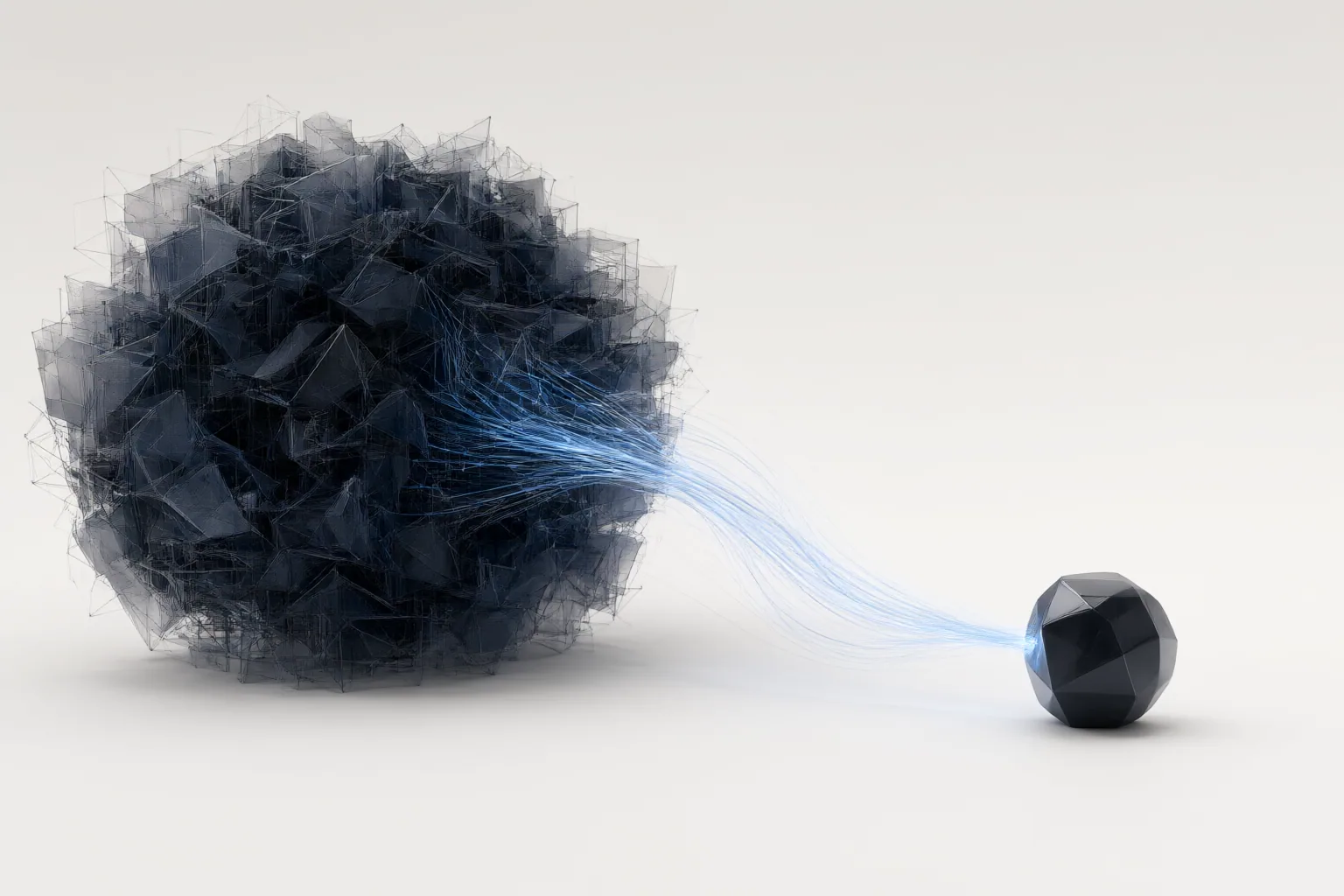
Model distillation trains a smaller student model to learn from a larger teacher. It can support more efficient evaluation and deployment on constrained hardware, but the label “distilled” does not prove that an AI image or video tool retains every capability of its teacher.
What model distillation means
Model distillation, also called knowledge distillation, is a training process in which a smaller student model learns from a larger teacher model. The goal is to transfer useful knowledge into a model that may be less expensive to evaluate and easier to deploy on less powerful hardware.
Distillation is not necessarily identical to model compression. The cited overview distinguishes distillation—which trains a smaller model—from compression techniques that reduce the size of an existing model without training a new architecture. That distinction matters when evaluating claims about how a tool was built: a smaller model may result from different processes, with different implications for its behavior.
How a student model learns from a teacher
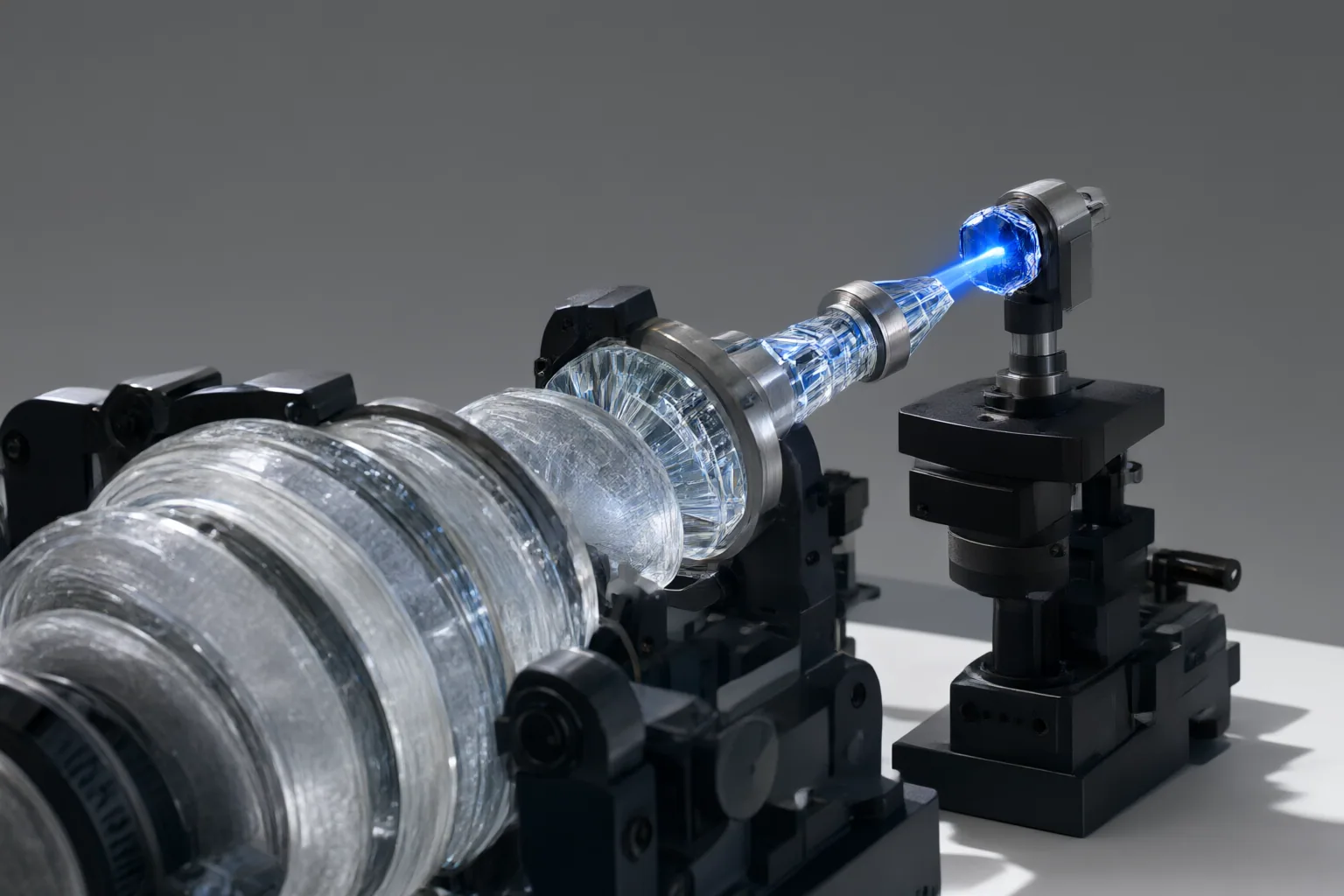
In classical knowledge distillation, the student can learn from the teacher’s softened output probabilities instead of relying only on hard class labels. These probabilities contain information about how the teacher differentiates among possible outputs. Temperature scaling makes differences among the probabilities more visible during training.
A training objective can combine two signals: the teacher’s outputs and available ground-truth labels. The student’s training and weights change, but the PyTorch example shows that knowledge can be transferred without adding computation to the student’s forward pass.
Distillation can also take other forms. Described approaches for modern language models include training with synthetic data generated by a teacher, matching the teacher’s internal features, and matching its output logits. These methods require different degrees of access to the teacher, so “distilled” does not identify one universal training recipe. The supplied sources also connect knowledge distillation with image classification and applications such as object detection, establishing relevance to image-oriented systems without demonstrating how any particular commercial tool was trained.
What distillation can mean for image and video tools
For an AI image or video tool, a smaller distilled model may support less expensive evaluation or deployment on constrained hardware, including less powerful or mobile hardware. Those characteristics can be relevant when a workflow cannot depend on the resources required by a larger model.
Efficiency, however, is not evidence of identical capability. The supplied sources do not establish that every distilled model preserves every behavior of its teacher. They also provide no verified product-specific comparisons for image-editing or image-to-video quality, latency, architecture, features, or hardware requirements.
Buyers should therefore separate a general technical rationale from a product claim. Distillation may explain why developers pursue a smaller deployment target, but it does not by itself show whether a tool can preserve details, perform a required edit, or meet a particular video workflow. Those conclusions require evidence tied to the specific task and product.
Conclusion
Treat “distilled” as a description of a training relationship, not as a complete performance verdict. When developers disclose the information, identify the teacher and student, the distillation approach, the intended hardware, and the target workflow. Then look for evidence covering the image or video capabilities that matter to you.
Before choosing an AI image or video tool, check task-specific quality, capability, latency, and hardware evidence rather than relying on the term “distilled” alone.
Disclosures and limitations
- This article was prepared with AI assistance from the supplied research package and is limited to claims supported by its cited sources.
- No product-specific benchmarks or recommendations are included, and no affiliate relationship is asserted.
Sources
- A Gentle Introduction to Model Distillation – MachineLearningMastery.com — MachineLearningMastery.com
- Knowledge distillation – Wikipedia — en.wikipedia.org
- Knowledge Distillation Tutorial — PyTorch Tutorials 2.14.0+cu130 documentation — docs.pytorch.org
- What is LLM Distillation? – GeeksforGeeks — GeeksforGeeks
- AI Distillation Explained: What It Is, How It Works, Legality Concerns — intellibytes.substack.com
- AI Model Distillation Explained: How It Works & Risks – EverydayAiHub.Net — EverydayAiHub.Net
- AI Model Distillation Explained — eWeek
- What Is Model Distillation? Explained for Beginners | AI/TLDR — AI/TLDR
Improve this guide
Report a problem or suggest the next question
Submissions enter a private editorial queue. They are reviewed and deduplicated before any public update or new page is created.